
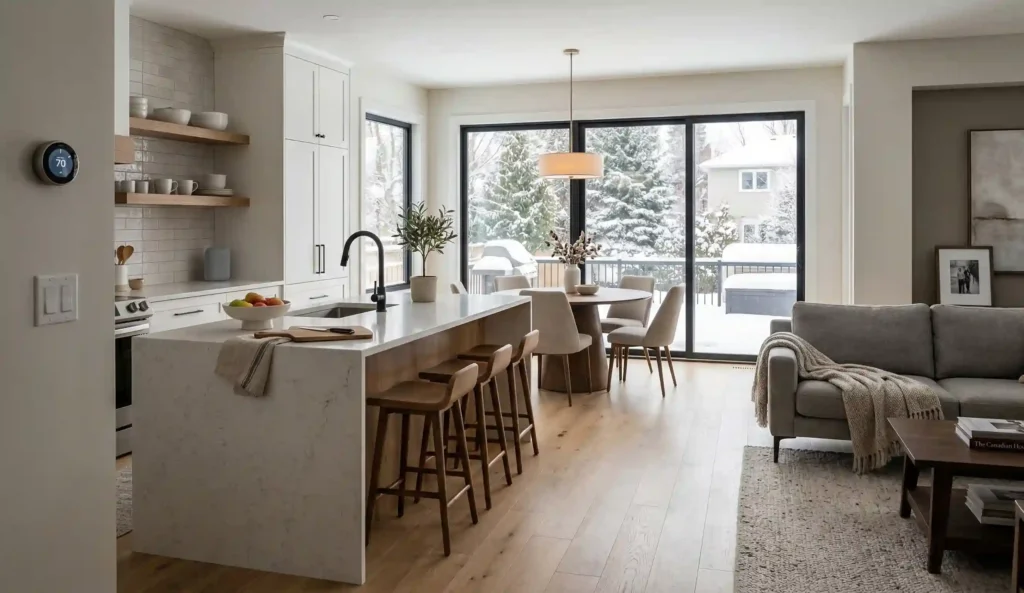
Planning a home renovation in Ontario in 2026 is no longer just about choosing trendy designs. Costs have increased, buyer expectations have evolved, and homeowners are becoming far more strategic with their investments.
If you are renovating without understanding cost and return on investment, you risk spending thousands on upgrades that do not add real value.
This guide breaks down what actually matters.
You will learn the most relevant home renovation trends in Ontario for 2026, what they cost, and which upgrades deliver the strongest ROI in today’s market.
Why Renovation Trends in Ontario Are Changing in 2026
Over the past few years, the Ontario housing market has shifted. Rising interest rates and limited housing inventory have pushed more homeowners to renovate instead of moving.
At the same time, construction costs have increased significantly. In most parts of Ontario, renovation costs now fall between $140 and $200 per square foot, with higher ranges in cities like Toronto.
This has changed how people approach renovations.
Homeowners are no longer upgrading purely for aesthetics. Every decision is now tied to one question. Does this add value?
That value can come in different forms. It could be better functionality, lower energy bills, rental income potential, or increased resale value. The most successful renovations in 2026 are the ones that deliver at least one of these outcomes.
Top Home Renovation Trends in Ontario for 2026
The trends shaping Ontario homes today are not just about design. They reflect how people live, how they manage costs, and what buyers expect when purchasing a property.
Energy Efficient Upgrades Are Now Essential
Energy efficiency has become one of the most important factors in home renovation decisions.
With long winters and rising utility costs, upgrades like improved insulation, high performance windows, and modern HVAC systems are no longer optional. They are expected.
These upgrades offer both immediate and long term benefits. Homeowners save on monthly energy bills, while buyers see them as a sign of a well maintained property.
From an investment perspective, energy efficient renovations often deliver strong returns. In many cases, they also qualify for government rebates, which further improves overall value.
Kitchens Are Still the Most Valuable Upgrade
Kitchens continue to be the centerpiece of most renovation projects. However, the approach in 2026 is more practical.
Instead of luxury focused upgrades, homeowners are prioritizing functionality and durability. Simple changes like cabinet refacing, better layouts, and energy efficient appliances are often more effective than full luxury remodels.
In Ontario, kitchen renovations typically range from $15,000 for smaller updates to over $80,000 for major projects.
Despite the cost, kitchens remain one of the safest investments. A well designed kitchen can significantly influence a buyer’s decision and often delivers one of the highest returns among renovation projects.
Basement Conversions Are Driving Real Financial Value
One of the most important trends in Ontario is the rise of basement conversions.
Many homeowners are turning basements into rental units or secondary suites. This shift is largely driven by the cost of living and the need for additional income.
A properly finished basement can increase property value while also generating monthly cash flow. This makes it one of the few renovations that can pay for itself over time.
Beyond rentals, basements are also being transformed into flexible spaces such as home offices, gyms, or entertainment areas. The key is to maximize usable space in a way that adds real function.
Bathrooms Are Becoming High Impact, Low Risk Upgrades
Bathroom renovations continue to grow in popularity because they offer a balance between cost and impact.
Unlike kitchens, bathrooms usually require a smaller budget, yet they still play a major role in how a home is perceived.
In 2026, the focus is on clean, simple, and functional designs. Walk in showers, neutral tones, and modern fixtures are dominating the market.
A well executed bathroom renovation can improve both daily comfort and resale appeal without requiring a large investment.
Multi Functional Spaces Reflect Modern Living
The way people use their homes has changed. Spaces are no longer designed for a single purpose.
Homeowners are creating flexible areas that can adapt over time. A spare room may function as both an office and a guest bedroom. A basement may serve as both a living space and a rental unit.
This shift is especially relevant in Ontario, where space is valuable and housing costs are high.
Buyers are actively looking for homes that offer flexibility. As a result, renovations that improve how space is used tend to deliver stronger long term value.
Design Trends Are Moving Toward Simplicity and Longevity
While functionality is the priority, design still plays an important role.
In 2026, interior design trends in Ontario are moving away from bold and temporary styles. Instead, homeowners are choosing natural materials, neutral color palettes, and timeless finishes.
This approach reduces the risk of designs becoming outdated. It also appeals to a wider range of buyers, which is important for resale.
A simple, well balanced design often performs better than a highly customized one.
What Home Renovations Cost in Ontario in 2026
Understanding cost is one of the most important parts of planning a renovation.
While prices vary depending on location and scope, there are some general benchmarks homeowners can use.
Kitchen renovations can range widely, from around $15,000 for minor updates to over $80,000 for full remodels. Bathroom renovations are typically more affordable, often falling between $10,000 and $25,000.
Basement renovations can be more complex. Converting a basement into a finished living space or rental unit can cost anywhere from $30,000 to over $100,000 depending on size and requirements.
Full home renovations are the most expensive projects. In Ontario, these can easily exceed $100,000 and may go beyond $300,000 for larger homes.
It is also important to account for hidden costs. Permit fees, design services, and unexpected repairs can quickly increase your budget. A contingency buffer of at least 10 to 20 percent is essential.
Which Renovations Deliver the Best ROI in Ontario
Not every renovation will increase your home’s value.
Some upgrades consistently perform well, while others offer limited returns.
Kitchens remain one of the strongest performers because they directly influence buyer decisions. A well updated kitchen can significantly increase both perceived and actual value.
Basement conversions are another high performing investment, especially when they create rental income opportunities. In many cases, the income generated can offset renovation costs over time.
Bathrooms also provide reliable returns. Even small improvements can enhance the overall appeal of a home.
Energy efficiency upgrades are becoming increasingly important as well. Buyers are paying more attention to long term operating costs, which makes these upgrades more valuable than ever.
On the other hand, highly personalized or luxury focused renovations tend to perform poorly from an ROI perspective. If an upgrade only appeals to a small group of buyers, it may not translate into higher resale value.
How to Plan a Renovation That Actually Adds Value
The biggest mistake homeowners make is starting a renovation without a clear strategy.
Before beginning any project, it is important to define your goal. Are you renovating to sell, to rent, or to improve your lifestyle?
If your goal is resale, focus on upgrades that appeal to a wide audience. Keep designs neutral and invest in areas that buyers care about most.
If your goal is personal use, you have more flexibility. However, it is still important to avoid over investing in features that will not hold value over time.
Budget planning is equally important. Always base your budget on realistic estimates, not ideal scenarios. Getting multiple quotes from contractors can help you understand the true cost of your project.
Finally, choosing the right renovation partner is critical. An experienced contractor can help you avoid costly mistakes, stay within budget, and deliver better results.
Final Thoughts
Home renovation trends in Ontario for 2026 are not just about style. They are about making smarter decisions.
The most successful projects focus on functionality, efficiency, and long term value. Whether you are upgrading your kitchen, finishing your basement, or improving energy performance, every renovation should serve a clear purpose.
If you approach your renovation with the right strategy, it can do more than improve your home. It can become a strong financial investment.


